How to build self-discipline without motivation

If you are waiting to feel motivated before you start, the task can stay on your list for weeks. A better way to build self-discipline is to make the first action small, clear, and tied to something already in your day. You do not need a burst of resolve to open a notebook or put your shoes by the door.
Self-discipline is often described as a personal trait, as if some people have a full supply and others do not. In practice, follow-through depends on the plan around the task. If the action is vague, inconvenient, or too large for today, it is harder to begin. You can change those conditions.
This guide gives you a short method: choose one action, shrink its first step, attach it to a cue, and plan how to return after a missed day. It works best when you use it for one behaviour at a time. For more on the area behind your routines and choices, visit the Self-Direction hub and the Growth & Skill hub. For related reading, see why self-improvement advice often fails and how to know what you want.
Why motivation often arrives after you start
Motivation feels like a green light. When it appears, starting seems easy. When it is absent, even a familiar task can feel like a negotiation. The trouble is that motivation changes with the day. Your plan should not depend on having the same mood every time.
Starting can give you new information. Once you sit at the desk, you may realise the report needs only one paragraph. Once you put on your walking shoes, a short walk may feel manageable. The first action turns a broad intention into a real task you can judge.
This does not mean you should force yourself through every task. Sometimes reluctance points to a poor fit, an overloaded week, or a missing resource. A small start lets you learn which problem you have. If the action is still wrong after five minutes, you can stop and revise the plan.
Choose one behaviour to practise
Start with a behaviour you can describe in one sentence. "Be more organised" is too broad. "Spend five minutes putting tomorrow's first task on my calendar" is observable. You know whether you did it, and you can repeat it.
Pick something that matters this month, not the most impressive goal you can imagine. Ask:
- What do I want to do more regularly?
- What would I actually do on a busy day?
- What is the smallest useful version of that action?
For example, suppose you want to learn a language. The full ambition might be 30 minutes of study each evening. The minimum version could be opening the lesson and reviewing one phrase. A short version is not a loophole. It is the action you can still do when the day does not go to plan.
Keep the other ideas in a parking list. Adding several habits at once creates several new decisions. Practise one for a couple of weeks, then decide whether to keep it, change it, or add another.
Shrink the first step until it is clear
Write the action as a physical instruction. A good first step tells you what to do with your hands, where to do it, or what to open.
| Vague intention | Clear first step |
|---|---|
| Exercise more | Put walking shoes beside the door after breakfast |
| Read regularly | Leave the book open on the chair and read one page after dinner |
| Keep up with work | Open the project file and write the next action at the top |
| Spend less impulsively | Add an item to a 24-hour list before buying it |
The first step should take two minutes or less. That is not the length of the whole habit. It is the doorway into it. After starting, you can continue if you have time and energy. If you only do the first step, you still kept the plan you made for a difficult day.
Do not make the action so tiny that it becomes meaningless. If your goal is to prepare for a certification, looking at the book may be too small on its own. A useful minimum could be answering one practice question and checking the explanation. The right size is the smallest action that gives you evidence of progress.
Attach your action to a cue
Choose a moment you already encounter. Then write the plan in this form: "After I [existing action], I will [small new action] in [place]."
Examples:
- After I pour my morning tea, I will write the first sentence of the proposal at the kitchen table.
- After I close my laptop for lunch, I will walk around the block.
- After I brush my teeth, I will put tomorrow's clothes on the chair.
- When I reach the bus stop, I will review one language card.
Pick a cue that happens often enough and has a clear point in time. "When I have some free time" is not a cue. Free time can pass without you noticing. "After the 3 p.m. meeting ends" is easier to spot.
Keep the required objects ready. Put the book beside your chair, save the document where you can find it, or add the phone number to your contacts. Small preparation removes one more decision from the moment you need to begin.
Make the task easier to begin than to avoid
Look at the distance between you and the first step. If your running shoes are buried in a closet, the task begins with searching. If the document is in a folder with an unclear name, it begins with hunting. Move the useful object or shortcut into view.
You can also add a gentle limit to competing actions. Put your phone in another room for the first ten minutes. Sign out of the site that absorbs your attention. Keep a note beside the screen where you can write down unrelated thoughts instead of following each one.
Do not build a complicated routine before you have tested the simple version. A new planner, a long checklist, and several reminders can become another project. Try one cue and one small action for a week. Keep only the part that makes starting easier.
Use a minimum version for busy days
Some days leave less time than you expected. Decide in advance what your minimum version will be. If you normally practise an instrument for 20 minutes, the floor version might be tuning it and playing one scale. If you plan a study session, the minimum could be one question and a note about what to review next.
This gives you two valid options:
- Full version: the amount of practice you want when the day allows it.
- Minimum version: the smallest meaningful action you can complete on a packed day.
Make both options specific. "Do a little" is hard to judge. "Read one page" has an end. If the minimum version starts feeling like a chore with no value, revise it. It should keep the activity connected to your goal, not preserve a streak for its own sake.
What to do when you miss a day
Missing a day does not erase the practice you have already done. It does mean the next step needs a decision. Return at the next practical cue instead of waiting for a new week or a perfect restart date.
Ask three plain questions:
- What got in the way this time?
- Was the task too large for the time I had?
- What will make the next start easier?
If the task took longer than expected, shorten it. If the cue disappeared because your schedule changed, choose another one. If you forgot, put the materials somewhere visible. Avoid turning one interruption into a story about your character. The plan can change; you do not need to make a promise to become a different person.
You may hear the rule "never miss twice." Treat it as a reminder to return, not a reason to punish yourself. A missed second day can still be followed by a useful third-day start. The practical question is always, "What is the next available time I can do the smallest version?"
Keep a short record of what works
For two weeks, make a simple mark when you start. Add one short note when the plan does not fit. You do not need a detailed journal. The record helps you distinguish a task that is easy to begin from one that keeps colliding with your day.
At the end of the two weeks, review these points:
- Which cue led to the most starts?
- What was the smallest version that still felt worthwhile?
- Which obstacle appeared more than once?
- Do I want to continue, adjust the plan, or choose a different behaviour?
If the action feels steady, you can increase it slightly. Add five minutes or one extra repetition, not a completely new routine. If it still feels hard to start, make the cue more visible or the first step smaller. Progress comes from a plan you can repeat, not a plan that looks ambitious on paper.
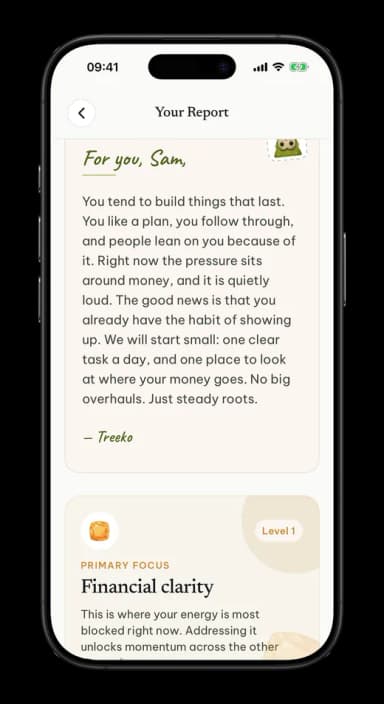
Rooted gives you a short assessment and a report across six areas, then one small daily task for the area that needs attention. Take the free test to get a clear place to start.
Frequently asked questions
Is self-discipline the same as willpower?
People use the words in different ways. For this exercise, focus on the actions you can set up: a clear cue, a manageable first step, and a way to resume after an interruption.
Should I wait until I feel motivated?
You can start with the smallest useful step and see how it feels. If you learn that the goal no longer matters or the timing is wrong, update the plan rather than forcing it.
How many habits should I practise at once?
Begin with one. Add another only after you understand when and where the first action fits into your week.
What if I keep missing the habit?
Check whether the cue happens reliably, whether the first step is small enough, and whether the goal still matters. Change one part of the plan and try again.
See which of your six roots needs attention. Take the free self-assessment in the Rooted app.