Life audit: a six-area guide

A life audit is useful when your days are full but you cannot tell whether they add up to the life you want. It gives you a simple page to compare two things: how important an area is to you and how satisfied you feel with it right now.
That difference matters. A low satisfaction score in an area you do not care much about may not need action. A middling score in something central to you may deserve attention. One overall rating hides that distinction.
This guide gives you a six-area life audit you can complete in about 20 minutes. You will score each area, read the gaps, choose one small action, and set a date to review it. You can use the same page again next month and see what changed.
What a life audit measures
A life audit is a snapshot, not a test you pass. It helps you notice where your time, choices, and priorities line up, and where they do not. The point is not to raise every score to ten. The point is to choose where a small change would matter most.
For each area, give two scores from 1 to 10:
- Importance: How much does this area matter to the life you want now?
- Satisfaction: How well is this area working for you today?
Use your first honest answer. A 6 does not mean you failed. It means the area feels more mixed than a 9. Scores are useful because they help you compare areas, not because they measure a universal standard.
Before you begin, choose a quiet 20-minute window. Use paper or a notes app. Write the date at the top. Do not look for the perfect scoring system. You are making a decision aid for yourself.
The six areas in this life audit
Rooted groups everyday self-understanding into six areas. You can use these labels as written or rename them so they sound natural to you. If you want an overview of the framework, see the six roots explained.
Self-direction
This area covers your ability to choose what to do and follow through on what matters. Think about routines, focus, boundaries around your time, and how much of your week feels chosen rather than automatic.
Ask yourself:
- Which small promise to myself have I kept lately?
- What decision have I delayed because I have not chosen a first step?
- Do my routines leave room for the work or rest I value?
Rate importance and satisfaction separately. You might value independence highly while feeling your current routine is shaped by other people's requests. That gap is more useful than a single label. The Self-Direction hub has more ways to think about choices and follow-through.
Connection and communication
Consider the relationships you maintain and the way you communicate in them. Include friends, family, colleagues, neighbours, and the small interactions that make up a normal week.
Ask yourself:
- Who do I make time for without being asked?
- Is there a conversation I keep postponing?
- When did I last show someone that I value their company?
Do not count contacts or compare your social life with someone else's. Notice whether the amount and kind of connection you have fits what you want. If friendship is the area you want to work on, the Connection & Communication hub offers a place to continue.
Financial clarity
This is about how clearly you understand your money and how well your everyday choices reflect your priorities. It is not a score of income or a comparison with another household.
Ask yourself:
- Can I name the regular bills and commitments I need to plan around?
- Is there one money question I keep putting off?
- Do my recent spending choices reflect what I say matters?
You can value financial clarity even if your circumstances are tight. The score describes your experience of the area, not your worth. Visit the Financial Clarity hub for more prompts.
Growth and skill
Think about whether you are learning, practising, or making progress on something that matters to you. Growth can mean a work skill, a creative practice, or a useful ability you want to build at home.
Ask yourself:
- What have I practised enough to notice improvement?
- Is there a skill I keep saying I want but never schedule?
- Have I compared my progress with my own starting point?
The area is about making room for practice, not collecting achievements.
Purpose and meaning
This area asks whether the way you spend your attention connects with what you care about. Meaning does not have to come from a single grand mission. It may show up in a responsibility, a craft, a community, or how you treat people.
Ask yourself:
- What did I do recently that felt worth the effort?
- Which value did I make time for this week?
- What do I want to say yes to more often?
If your answers are unclear, try What a real self-assessment tells you after this audit. You can also explore the Purpose & Meaning hub.
Body and energy
Look at the conditions that shape your day: movement, breaks, pace, and the demands you take on. Keep this practical. Rate your experience, not your body against an ideal.
Ask yourself:
- At what point in a normal day do I have enough energy for focused work?
- Which regular commitment leaves me with less capacity for the rest of the day?
- What small change helps me feel more ready to do what I planned?
Notice whether a change in pace or a planned break could make one part of the day more workable.
Score the areas without overthinking
Make a six-row table with columns for area, importance, satisfaction, and one note. Fill in both scores before writing the note. A short phrase is enough: "three evenings booked," "called my sister," or "not sure what I spend on subscriptions."
Here is a fictional example:
| Area | Importance | Satisfaction | Note |
|---|---|---|---|
| Self-direction | 8 | 5 | I keep postponing the course I chose |
| Connection | 7 | 7 | One good conversation each week |
| Financial clarity | 8 | 4 | I have not reviewed recurring costs |
| Growth and skill | 6 | 6 | Practising guitar twice a week |
| Purpose and meaning | 9 | 6 | Volunteer work feels useful, but rare |
| Body and energy | 7 | 5 | Meetings fill the hours I focus best |
The numbers do not tell this person what to do. They show where to ask a better question. Financial clarity has a large gap and high importance. The person could begin with one 15-minute review of recurring costs. Purpose also matters, but the first practical move may be to schedule one volunteer shift.
If two areas tie, choose the one you can affect this week. If every score is low, do not create six projects. Pick one area and an action that takes less than 20 minutes. If every score is high, write down what is working so you can protect it.
Turn the largest gap into one next step
For each area, subtract satisfaction from importance. The result is a rough attention gap. For example, importance 8 minus satisfaction 4 gives a gap of 4. This is not a scientific measurement. It is a way to spot the areas that may deserve a closer look.
Choose the highest gap, then ask: "What would make this area one point better by next month?" Make the answer an action you can see and finish.
Weak action: "Get better with money."
Usable action: "On Thursday, list the three bills due before the end of the month."
Weak action: "Reconnect with friends."
Usable action: "Send Maya a message today and suggest a 20-minute walk next week."
Write the day and time. Put the task where you will see it. If it takes more than an hour, write only the first step. A life audit should leave you with something you can do, not another list of ways you should improve.
Review your life audit in 30 days
Put a reminder on your calendar for about a month from today. At the review, read the old scores before changing them. Ask what happened, what you learned, and whether the area still matters in the same way.
Do not change a score just because you completed the action. The action may have helped, or it may have shown you that a different problem deserves attention. Record what you observed. For example: "I did the bill list. The uncertainty came from irregular freelance dates, so I need a calendar reminder before each due date."
You can repeat the six-area audit every month or at a major change. If it starts to feel like grading yourself, take a break. The page is there to help you make choices, not to turn your life into a performance report.
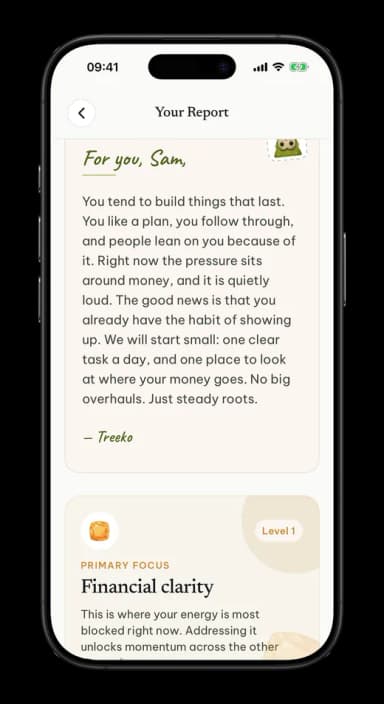
Rooted uses a short assessment to help you look across six areas, then gives you a report and a small daily task for the area that needs attention. Take the free test when you want a guided starting point.
Frequently asked questions
Is a life audit the same as setting goals?
No. The audit helps you decide which area deserves attention. A goal is one way to respond. You might also protect a routine that works, have a conversation, or decide not to add a new commitment.
Should I share my scores with someone?
Only if that would help you. The exercise is personal. You can share one observation or action without handing over every score.
What if my priorities change next month?
That is useful information. Update the importance score and note what changed. The audit reflects your current priorities, not a permanent ranking of what matters.
Can I do a life audit in one sitting?
Yes. Set aside about 20 minutes, rate each area, and choose one step. You can return later if a question needs more thought.
See which of your six roots needs attention. Take the free self-assessment in the Rooted app.