Financial avoidance: how to face your money

Financial avoidance often looks ordinary from the outside. You leave a statement unopened, postpone checking a balance, or let a bill sit in your inbox because you are busy. Then the task grows in your mind, even though the first step might take a few minutes.
The answer is not to shame yourself into becoming more disciplined. Start by making the information smaller and clearer. Set a 15-minute timer, look at one account or one bill, and write down what you learned. You do not have to make a major financial decision in that session.
This guide offers a practical first look at your money, a weekly number to track, and a way to plan a next step. It does not recommend financial products or tell you what to invest in. Its purpose is to help you understand the choices already in front of you. For more on this area, visit the Financial Clarity hub, the Self-Direction hub, and the Purpose & Meaning hub.
What financial avoidance can look like
Avoidance is not always dramatic. It may be a small task you keep moving to tomorrow:
- You are not sure what is in your account because you have not checked.
- You leave a bill notification unread until the due date is close.
- You hand every money decision to a partner or family member without asking to see the details.
- You avoid comparing a planned expense with the money available for it.
- You do not know which subscriptions renew this month.
Any one of these can happen during a busy period. The useful question is whether putting it off is making the next decision harder. If so, pick the smallest piece of information you can gather today.
Why a small first look helps
When a money task feels vague, your mind may fill the gap with worst-case guesses or a long list of things you should do. Looking at one statement replaces some of that uncertainty with a fact. You might discover that a payment already cleared, or that you need to ask a provider about a due date. Either way, you have a next step you can name.
Clarity does not mean that every number will be comfortable or that you can change every circumstance. It means you know enough to make the next decision. You can separate what is known, what is due, and what you still need to find out.
If another person manages some of the household finances, you can still ask for a shared overview. Begin with a simple request: "Could we look at the regular bills together this weekend so I know what is coming up?" The aim is to understand the plan, not to assign blame.
A 15-minute money review
Choose one account, bill, or planning question. Do not open every app and folder. Set a timer for 15 minutes and use these steps.
Minute 1 to 3: name the task
Write one sentence: "I want to know ___." Examples include "when the electricity bill is due," "what my current account balance is," or "which subscriptions renew this month." A clear question gives you a finish line.
Minute 4 to 9: find the information
Open the relevant statement, account, or email. Record the date and number you need. If a number depends on a pending transaction, mark it as an estimate. Do not assume that every balance means the same thing. If you are unsure, write down the name of the detail you need to check.
Minute 10 to 12: list what is due
Write the next three payments or money dates that matter. Include the due date and the action required. For example:
| Item | Date | Next action |
|---|---|---|
| Phone bill | 18th | Confirm automatic payment |
| Course fee | 23rd | Check amount in email |
| Savings transfer | 30th | Review after salary arrives |
Use your actual dates and names. If you only know one item, write one. There is no requirement to complete a full monthly budget in this session.
Minute 13 to 15: choose the next action
Ask what should happen next. You may need to pay, set a reminder, ask someone a question, or find a missing amount. Write one action with a day and time. If the task is bigger than 15 minutes, write the first step and stop when the timer ends.
The review is complete when you know one more thing than you did before. It does not need to end with a perfect plan.
Pick one number to track each week
Tracking too much can make money management feel like another full-time task. Choose one number that answers a current question. You might track the date of the next bill, the current amount in a particular account, or the number of unplanned purchases you want to review.
Pick a regular moment, such as Friday afternoon or the day after a payment arrives. Write the number in the same note each time, along with the date. Keep it for four weeks, then ask whether it helped you make a decision.
If the number changes for reasons outside your control, the record can still help you plan. For example, if income arrives on different dates, you could list the next expected date and the payments due before then. The record is for understanding your situation, not for judging yourself.
When to ask someone else for information
Some money questions need information from another person or organisation. Write down the exact thing you need to know before you ask. A clear question is easier to answer than "Can you explain everything?"
Try a direct request:
- "Can you confirm the amount and due date for this bill?"
- "Which account pays for this regular cost?"
- "Can we set aside 20 minutes to list the expenses we share?"
- "What happens if I need to change this payment date?"
Take notes during the conversation. If the answer is still unclear, ask for a written confirmation or a link to the relevant information. You do not have to make a decision before you understand the terms.
If you are facing a complex financial, tax, or legal question, seek guidance from a qualified professional who can consider your specific circumstances. This article offers a general organisation exercise, not personal financial advice.
Connect money choices to what matters to you
Financial clarity is not only about checking numbers. It can also help you see whether your choices support the things you value. Look at one recent purchase or commitment and ask: "What did I want this to make possible?" You might see that you paid for convenience during a crowded week, or that an activity was worth the time and cost.
This question is not a reason to label purchases as good or bad. It helps you notice patterns. If you want to make more room for a priority, choose one change you can test: pause a renewal you no longer use, set a reminder before a large payment, or plan one low-cost way to spend time with a friend.
For a wider look at how money fits among your priorities, read Money and financial clarity. You can also use a life audit to compare financial clarity with the other areas you care about.
Make the next review easier
Before closing the account or statement, leave yourself a note for next time. Write where you found the information and what you still need to check. If you used an online account, save the official sign-in page in your browser rather than keeping sensitive account details in an open note.
Choose the next review date now. A weekly 10-minute check may be enough for one person; someone else may prefer to check only before a set of regular payments. Set a rhythm that fits how often your circumstances change.
If the first session revealed a larger task, break it up. One session can list recurring costs. Another can check dates. A later one can help you decide what questions to ask. You do not have to turn the first look into an evening of financial administration.
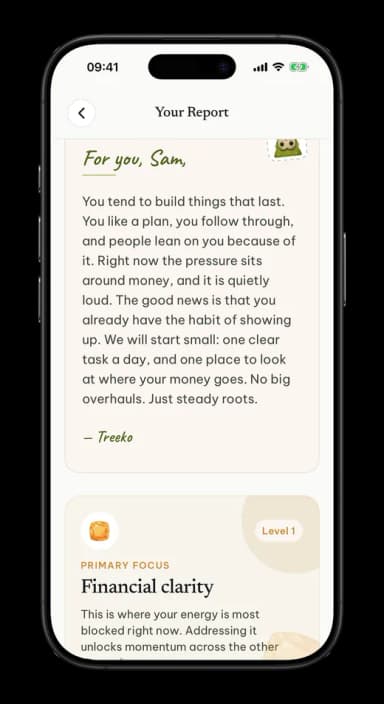
Rooted includes Financial Clarity as one of six areas. Its short assessment helps you see which area may need attention first, then gives you a small daily task. Take the free test for a guided starting point.
Frequently asked questions
Is financial avoidance a sign that I am bad with money?
No single delayed task says that about you. It shows there is information or a decision you have not handled yet. Start with that task and see what would make it easier to finish.
What if I cannot pay a bill that is due?
Check the provider's official information and contact them to ask what options are available. Keep a note of whom you spoke with and what they said. If you need advice about your specific situation, speak with a qualified local adviser.
Should I check my account every day?
There is no single schedule that fits everyone. Choose a rhythm that helps you notice upcoming commitments without adding needless checking to your day.
What if my partner handles the finances?
You can ask for a shared list of regular bills, dates, and accounts. A short overview can help both people understand the plan and decide what information to review next.
See which of your six roots needs attention. Take the free self-assessment in the Rooted app.