How to stop comparing yourself to others

You see a colleague's promotion, a friend's new home, or someone's polished travel photos, then look at your own life and decide you are behind. The comparison feels clear because there is a visible result to measure. But you are comparing your whole, complicated week with one part of another person's story.
You may not need to stop noticing other people. You can learn from a method, ask how someone built a skill, or admire work you respect. The useful change is to stop using someone else's circumstances as the score for your own progress.
Try three steps: name what you are comparing, look back at your own last 12 months, and write a short list of things you have done or learned. Then choose one next step that fits the values you want to live by. If you are deciding what success means to you, the Purpose & Meaning hub, Growth & Skill hub, and Self-Direction hub can help you choose a direction.
Name the comparison before you follow it
When you notice yourself measuring your life against someone else's, write down the exact comparison. "They are more successful" is too broad. Try "They have a senior title and I do not" or "They travel more often than I do." A clear statement lets you see what the comparison actually uses as evidence.
Then ask:
- Do I want the thing I am measuring?
- What do I know about the work, time, money, or choices behind it?
- What part of this person's approach could I learn from?
- What part depends on circumstances I cannot see or share?
You may discover that you want the skill, recognition, or freedom you associate with the result. That is useful information. You can choose a next step toward it without deciding that you need the other person's exact life.
Remember what the highlight leaves out
A visible result shows only what someone chose or happened to share. You may see the finished project without the drafts, the trip without the budget, or the new role without the work that led to it. You also see your own missed plans and unfinished tasks in detail.
This difference does not mean another person's success is fake. It means you have incomplete information. A fairer comparison uses something you can observe: the skill you want to learn, the type of work you want to try, or the boundary you want to practise.
If an account reliably leaves you feeling behind, you can mute it, unfollow it, or set a time for checking it. That is a practical choice about what you want to see. You do not need to make a judgement about the person posting.
Use your past self as a reference point
Choose a date about 12 months ago. Look through your calendar, photos, saved work, messages, or notes. You are not searching for a dramatic transformation. Look for specific things you can point to:
- A task you can do now that used to take more time.
- A conversation you handled more directly.
- A routine you tested and kept.
- A decision you made with better information.
- A responsibility you learned to carry.
- A project you finished, changed, or chose to stop.
Write each item as a sentence with an example. "I am more confident" is hard to check. "I asked for the project timeline in the kickoff meeting" gives you a moment you can remember.
If you cannot find much, narrow the period to the last three months. The goal is not to prove that you have improved. It is to make your own progress visible enough that it can inform your next decision.
Keep a running list of evidence
Make a note called "Things I have done" or "Progress I can point to." Add a line when you finish a task, learn something, make a choice, or handle a familiar situation differently. Keep it factual and short.
Examples:
- Sent the draft before Friday instead of waiting for it to feel perfect.
- Practised the presentation twice and asked one person for feedback.
- Set a limit on weekend work and told the team when I was available.
- Returned to the course after missing a week.
- Asked a friend to make plans instead of assuming they were too busy.
Review the list when you start comparing yourself. It gives you evidence that is easy to forget when someone else's update is in front of you. It is not a scoreboard. It is a record of your own actions and decisions.
Choose a practice that you can schedule and repeat. A specific task makes it easier to check your own progress a week later.
Decide what success means before you measure it
Comparison becomes harder to resist when your goal is borrowed. Before deciding you are behind, write what you would want if nobody else could see the result. Would you still want the title, the house, the trip, or the audience? If yes, what part matters to you: the work, security, learning, independence, or connection?
Use your answer to choose a measure you control. Instead of "be as successful as my colleague," you might choose "finish one portfolio project by the end of the quarter" or "ask two people in the field how they entered it." Instead of "travel like my friend," you might decide "save a set amount for one weekend away" or "visit a nearby place this month."
For a practical way to name what matters, try the core values exercise. It can help you separate your own priorities from a standard you picked up by watching someone else's choices. You may also find why self-improvement advice often fails useful when choosing a measure for progress.
Turn comparison into one question
Sometimes comparison points to something you want to learn. Use that moment to ask a useful question rather than criticise yourself.
- "They speak confidently in meetings" can become "What did they do to prepare for that presentation?"
- "They make time for creative work" can become "Which hour could I protect for a small project?"
- "They seem to have good relationships" can become "What is one way they keep in touch that I could try?"
Ask respectfully and accept that the other person may not want to share. You can also observe the method yourself. The purpose is to collect an idea you can test, not to copy a complete life.
Make a plan for the next comparison moment
Choose a moment that tends to trigger comparison, such as opening a social app before bed or hearing a work announcement. Write a short response you can use:
- Name the measure: "I am comparing job titles."
- Check your own goal: "I want more responsibility in project planning."
- Choose an action: "Ask my manager about leading the next planning session."
If there is no action to take, close the app or move to the next task. You do not have to solve your life every time you notice somebody else's news.
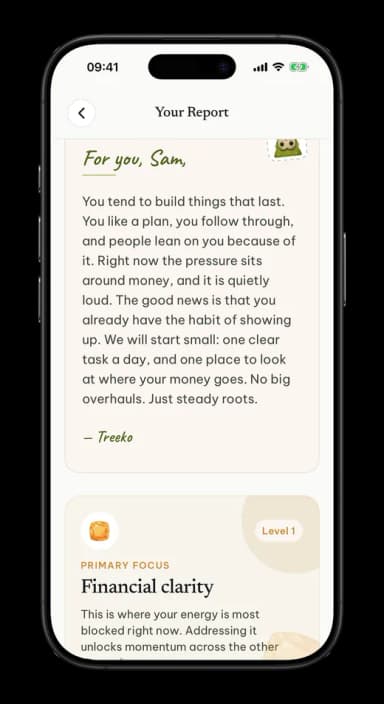
Rooted's Growth & Skill area helps you look at your own progress, and its short assessment gives you a report across six areas with one small daily task. Take the free test if you want a clearer starting point. You can record what you want to practise before you begin and check your own progress a week later.
Frequently asked questions
Should I avoid social media completely?
That depends on what you use it for. You can keep the parts that help you stay in touch and change how often you view accounts that lead to unhelpful comparisons.
What if someone else is actually ahead of me?
They may have more experience or a result you want. Use that as information about a possible path, then choose a step that fits your own circumstances and priorities.
How do I compare progress fairly?
Choose one skill or behaviour and compare your current actions with your earlier ones. Use examples you can verify, such as work completed or a routine you kept.
What if I do not feel proud of my progress?
You do not have to force pride. Write down what happened in plain terms and decide whether it points to something you want to continue, change, or leave behind.
See which of your six roots needs attention. Take the free self-assessment in the Rooted app.